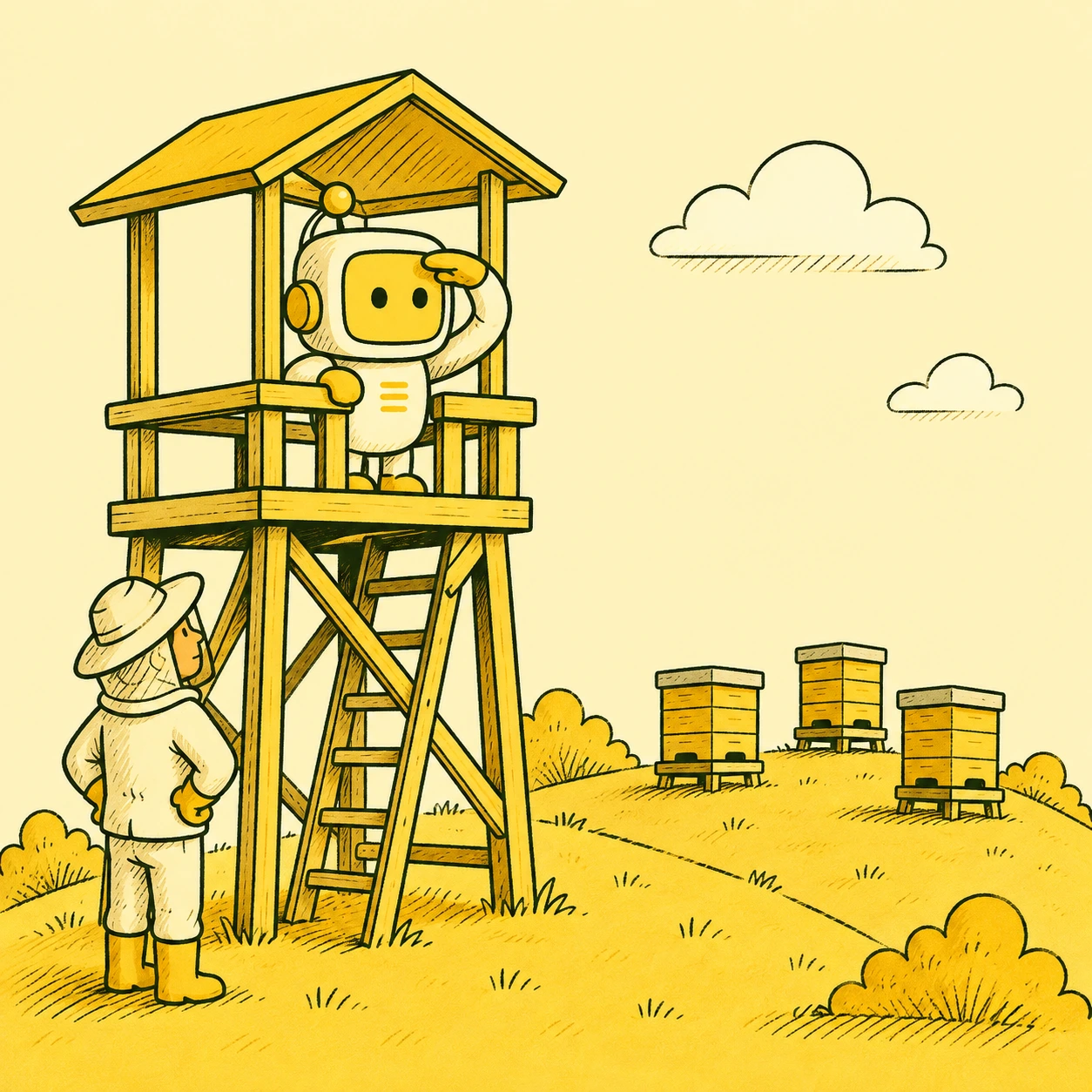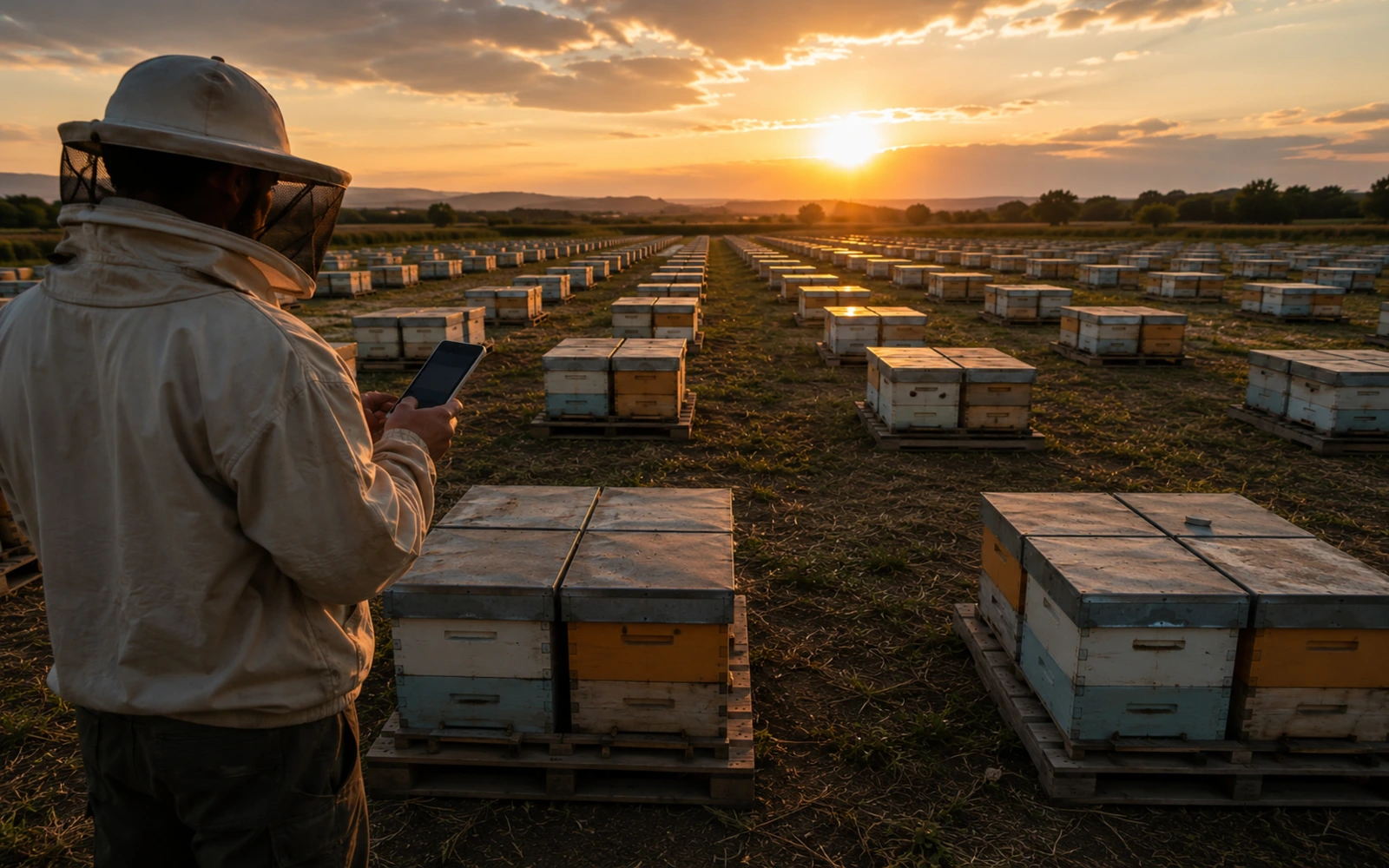

Picture a beekeeper standing in the middle of a vast field, facing 120 identical hives lined up in neat, repetitive rows. One of them—just one—is acting strange. The sensor tucked inside has flagged an issue that needs urgent attention. The beekeeper knows he has to act. But which hive is it?
Opening 120 hives isn't just half a day of lost labor; it means disturbing hundreds of thousands of bees for no reason. We needed a way to point the beekeeper to the exact hive, instantly. So, we set out to build it.
Our first idea felt obvious: make the sensor beep. The beekeeper would walk the field, follow the audio cue, and track it down by ear.
Reality had other plans. A apiary is a surprisingly noisy place. Imagine thousands of bees humming in unison, wind sweeping across the open field, and tractors idling in the distance. Our tiny chirp was swallowed whole. To make matters worse, the thick wooden walls of the hive heavily muffled the sound. What was meant to be an acoustic lighthouse turned out to be a barely audible whisper.
Time to lean into technology. Every BeeHero sensor constantly broadcasts a tiny Bluetooth signal—a heartbeat-like transmission known as "advertising". Roughly once every two seconds, it sends a short burst of radio waves into the air: "I'm here, and here's my ID". Any nearby smartphone can pick up that broadcast and measure its strength using a metric called RSSI. Think of it like the signal bars on your phone: more bars mean a stronger signal and a closer source.
The plan seemed foolproof: walk the rows with a phone, watch the signal numbers rise, and follow them home.
But the field humbled us again. A metal hive roof severely dampens the signal. A metal queen excluder weakens it further. Even bee density, humidity, and temperature played tricks on the readings. Sometimes, the sensor right in front of us yielded the weakest numbers. The data, on its own, couldn't be trusted.
Frustrated, we asked ourselves a counterintuitive question: why are we trying to hear a beep from the sensor? Let’s make the sensor listen to a beep from us!
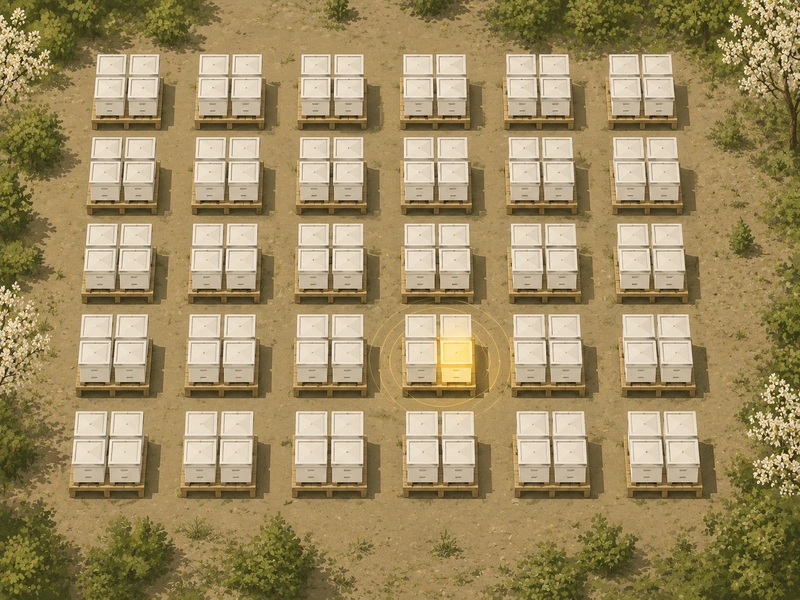
After a few successful lab tests, we packed our gear into a car and drove out to a real apiary. The yard was typical: dozens of wooden pallets spread across an open field, each holding a stack of four hives.
To trigger the sensor, we needed to get within 30 to 50 meters—the standard range for our Bluetooth system. In a small yard, this is effortless; you walk in, and the app connects immediately. In massive commercial yards, however, finding that initial range manually takes too long.
To solve this, we utilized our commercial gateways. Because multiple gateways can "see" each sensor from afar, they can triangulate the target's general vicinity. We simply walked straight to the nearest gateway and started our search from there.
Then came a slow, methodical dance. We walked pallet by pallet, stood between the four clustered hives, and played a crisp 4-second tone from the phone. A moment later, the sensor "whispered" back its score: a metric of how loudly it had heard us.
Suddenly, one pallet clearly outscored the rest. The mystery was instantly narrowed from the entire yard down to just four hives. From there, we repeated the ritual up close: stand beside a hive, play the tone, check the score, and move to the next. By the end of that quick four-hive round, the target stood out unmistakably.
It worked every single time. But during the trials, we noticed something incredible: in every single test, the hive that won on sound also won on Bluetooth signal strength. The answer had been right under our noses the whole time. RSSI alone was enough; we just hadn't been using it correctly.
Our audio experiment taught us two critical lessons. First, it showed us exactly where to hold the phone to get a clean, unshielded reading—away from the metal roofs and queen excluders that distort the signal.
Second, we realized that comparing different sensors against each other was entirely the wrong approach. Most Bluetooth scanning tools look at everything in range and pick the highest number. But because every sensor lives inside its own unique microclimate of wood, metal, and dense bee clusters, those comparisons are never fair.
The real insight was a paradigm shift: what if we stopped comparing? If you ignore every other sensor in the field and track only your target as you move, those environmental microclimates no longer matter. There is only one question left to answer: where do I see this specific sensor hit its personal peak?
Only one engineering hurdle remained. A sensor only broadcasts once every two seconds. In the field, two seconds feels like an eternity. If you take three steps in that time, the data on your screen is already outdated.
So, we taught the sensor a new trick. The moment the app identifies the target hive, it pings it with a quiet instruction: speed up. The broadcasts immediately shift into a rapid, steady pulse, updating the phone in real time. (While this draws slightly more battery, a built-in safety timeout automatically slows the sensor back down once the search ends).
On the user interface, we stripped away the dry, confusing numbers. Instead, we turned the hunt into a classic childhood game: Hot or Cold. We designed a color-shifting UI accompanied by a variable beep that quickens its pace as the beekeeper closes the distance.
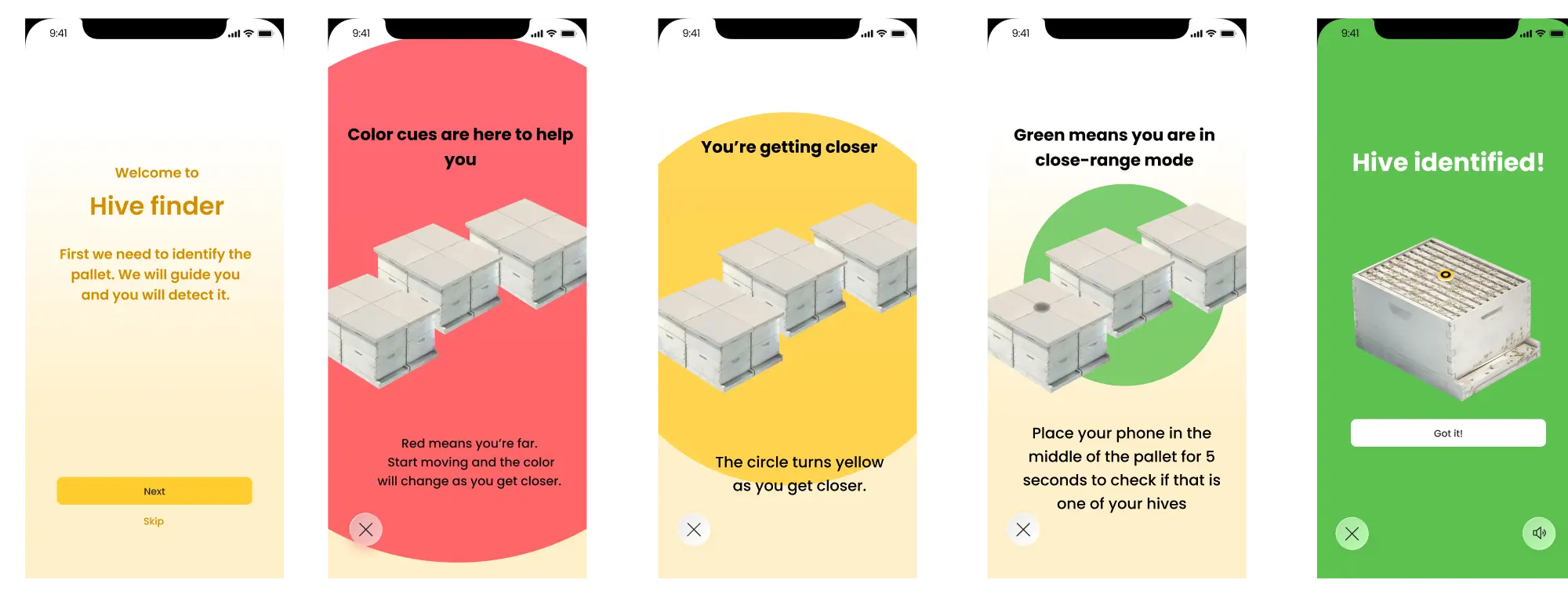
Today, the beekeeper doesn't need to understand Bluetooth protocols, decipher RSSI metrics, or crack open a single extra hive. He simply opens the app, starts walking, and watches the screen warm up as the phone pulls him toward the right spot.
What used to require hours of frustrated, manual searching has been reduced to a simple, one-minute stroll. Sometimes, the smartest solution isn't adding more technology—it's just learning how to ask a simpler question.